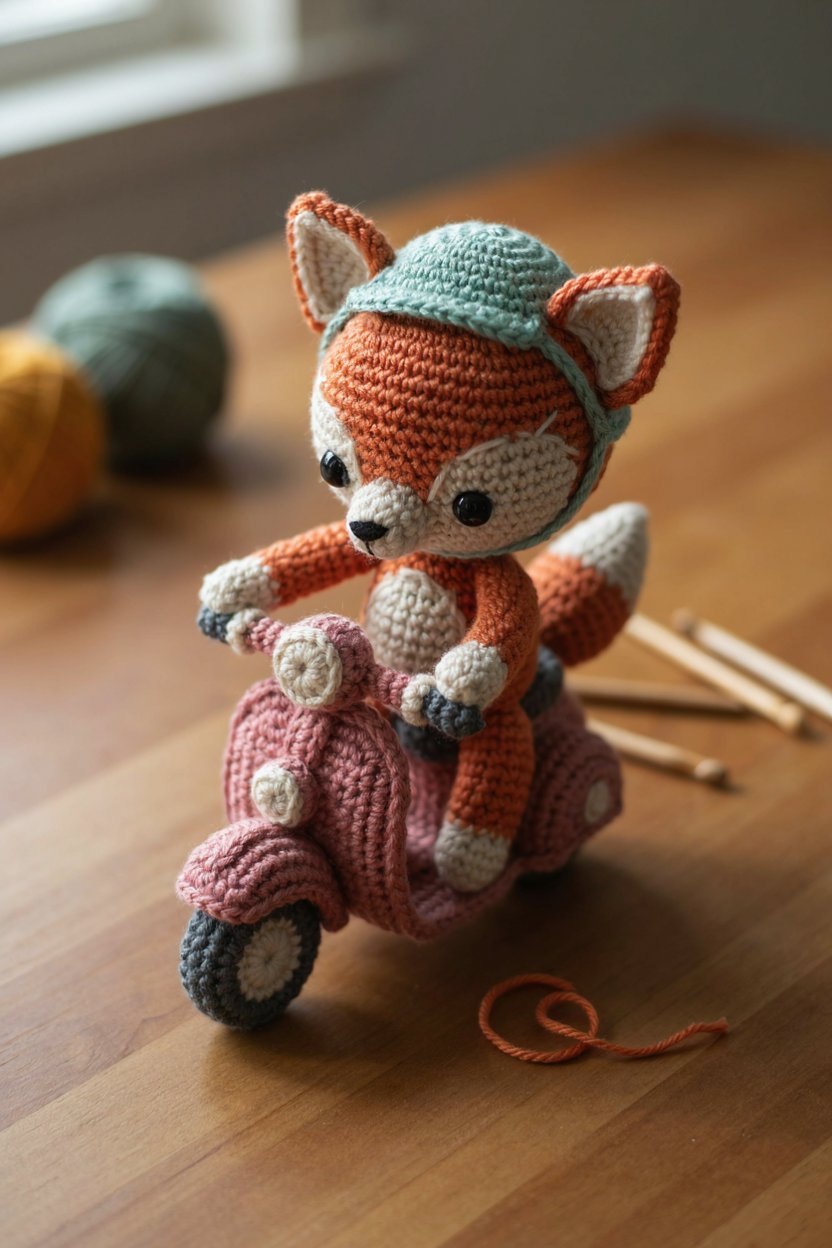
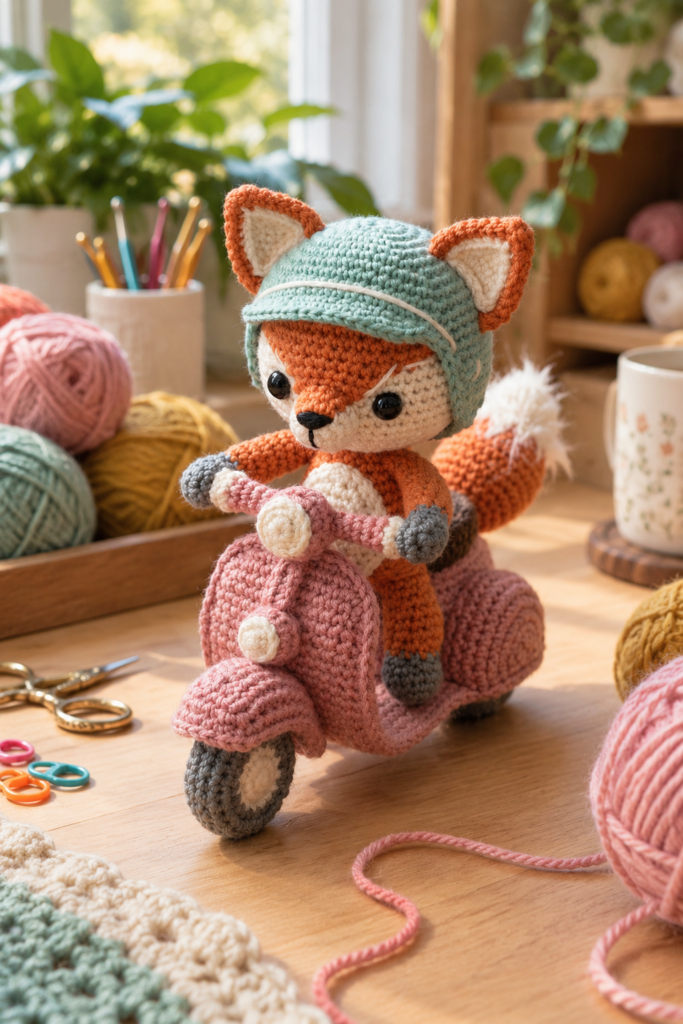
If you love cute amigurumi with a little personality, this Cute Amigurumi Fox on Scooter Free Crochet Project is the kind of handmade piece that instantly stands out. Instead of making a fox that simply sits on a shelf, this design gives the character a tiny pink scooter, a mint-colored cap, and a playful riding pose.
The finished piece combines several fun crochet elements: a small fox character, a crocheted outfit and accessories, and a miniature scooter. The result is a decorative amigurumi that works beautifully as a handmade gift, nursery decoration, craft-room display, or simply a fun project for your own collection.
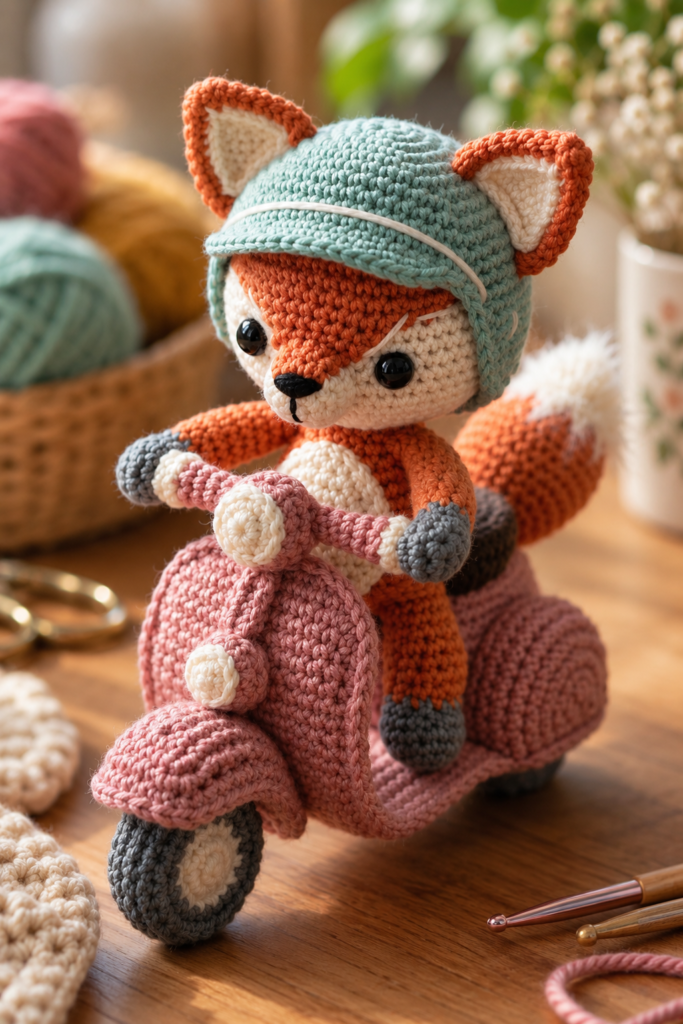
The reference design uses warm orange and cream yarn with soft pink, mint, and gray details. The individual stitches are easy to appreciate up close, which is one of the things that makes this project especially appealing to crochet lovers.
Why This Crochet Fox Project Is So Special
There are plenty of fox amigurami designs, but adding a scooter gives this one a completely different personality.
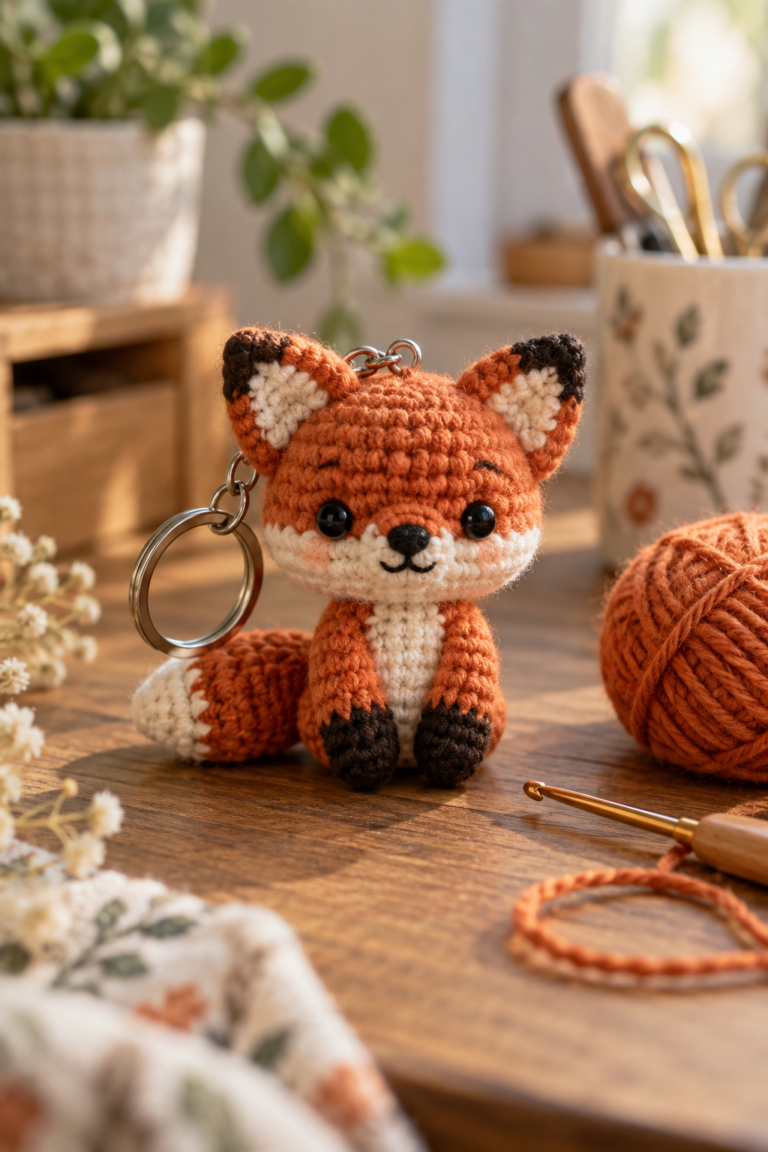
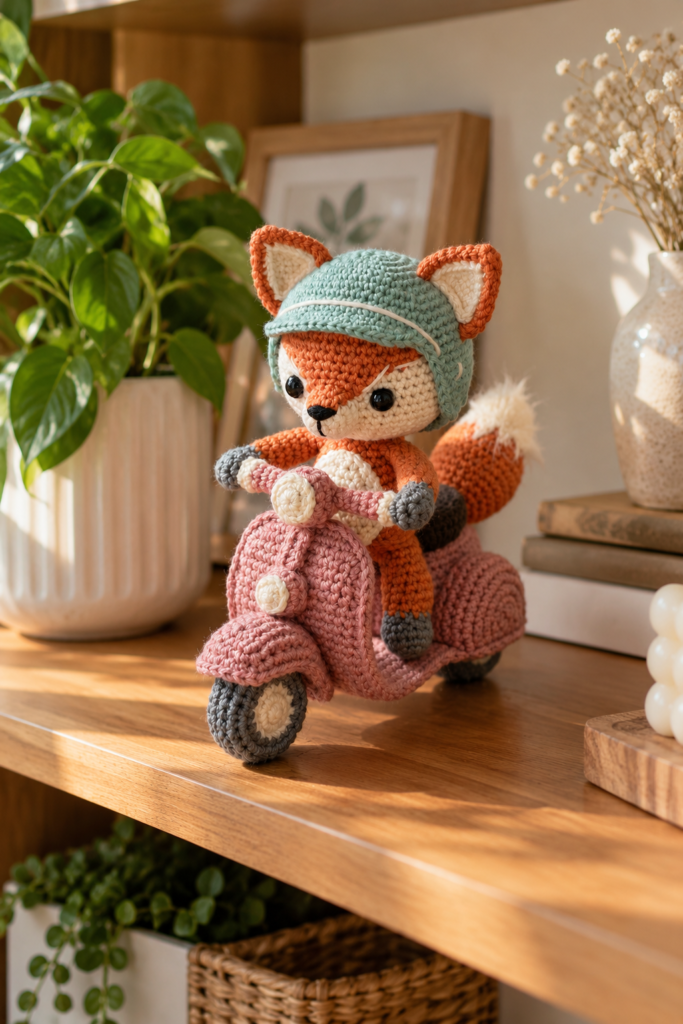
The fox has a classic woodland-animal look with an orange body, cream face and belly, pointed ears, shiny black eyes, and a fluffy-looking tail tip. The mint crochet cap adds another layer of character, while the pink scooter creates a playful contrast against the orange fox.
One detail I particularly like about this style of project is how the colors work together without becoming overwhelming. The orange and cream establish the fox’s identity, while pink, mint, and gray are used as supporting colors.
That makes the finished amigurumi colorful enough for children while still fitting nicely into a cozy craft room or neutral home.
It also gives crocheters an opportunity to practice more than one type of construction. You are not only working on an animal body; you are also thinking about small accessories, shaping, assembly, balance, and how separate crocheted pieces work together.
What You Need for a Crochet Fox on a Scooter
Before starting a project like this, gather your materials first. Having everything nearby makes small amigurami projects much less frustrating.
Yarn
A smooth worsted-weight or similar amigurami-friendly yarn is a practical choice for a project of this style.
You will generally want colors similar to:
- Rust or orange for the fox
- Cream or off-white for the muzzle and belly
- Mint or soft sage for the cap
- Pink for the scooter
- Gray for the paws and wheels
- Black for facial details
The exact yarn brand is less important than choosing yarn with consistent thickness. A very fuzzy yarn can hide your stitches, which makes shaping and counting more difficult.
For beginners, a smooth cotton or cotton-blend yarn is particularly easy to work with because individual stitches remain visible.
Crochet Hook
Use the hook size recommended for your yarn and desired tension.
For stuffed amigurami, crocheters commonly use a smaller hook than they would for a loose blanket made with the same yarn. The reason is simple: you want compact stitches so the stuffing does not show through the fabric.
Do not automatically choose a smaller hook without checking your tension. Your stitches should be firm but still comfortable to make.
Stuffing
Use a good-quality polyester fiberfill for the fox and other three-dimensional crocheted pieces.
Add stuffing gradually rather than filling everything at once. This gives you much better control over the shape.
Safety Eyes or Embroidered Eyes
The reference design uses shiny black eyes.
If the finished fox will be given to a young child, consider embroidered eyes instead of plastic safety eyes. Safety eyes can be secure when installed correctly, but they are not automatically suitable for every age group.
Other Supplies
You may also need:
- Tapestry needle
- Stitch markers
- Scissors
- Pins for positioning pieces
- Fiberfill stuffing
- Small amount of black yarn for facial details
- Optional craft wire or internal support only if the specific pattern calls for it
Understanding the Design Before You Crochet
One of the easiest ways to make an amigurami project go wrong is to start crocheting without looking at the finished shape first.
Take a few minutes to study the reference design.
The fox consists of several visually important areas:
The Head
The head has a rounded shape with a slightly wider cheek area. The cream muzzle contrasts with the orange forehead, and the black nose sits near the center of the face.
The eyes are positioned relatively low on the head, giving the fox its cute expression.
Small placement differences can change the expression considerably, so facial pieces should be positioned carefully before permanently attaching them.
The Ears
The ears are pointed and have cream-colored centers with orange edging.
Try to keep both ears similar in size and angle. Even a small difference can make an amigurami character look uneven.
The Cap
The mint-colored cap is one of the most recognizable features of this particular design.
It wraps around the top of the fox’s head and includes openings that accommodate the ears. A cream-colored cord/detail runs around the cap, adding definition.
Because this is a prominent accessory, keeping its shape neat is important.
The Body and Tail
The fox’s body is primarily orange with a cream belly.
The large curled tail extends behind the character and finishes with a light cream tip. The tail is an important part of the silhouette, so its position affects how the whole character looks from the side.
The Scooter
The scooter is crocheted in shades of pink with gray wheels and handle details.
Unlike a simple flat accessory, the scooter needs enough structure to look like a recognizable miniature vehicle. The wheels also need to sit correctly so the character does not look as though it is floating above the scooter.
Crochet Techniques That Are Useful for This Project
You do not necessarily need advanced crochet skills to work on an amigurami project like this, but you should be comfortable with basic shaping.
Depending on the exact pattern you follow, you may encounter techniques such as:
- Magic ring
- Single crochet
- Increasing
- Decreasing
- Working in continuous rounds
- Slip stitch
- Chain stitch
- Sewing crocheted pieces together
- Basic embroidery
- Stuffing and shaping
Working in Continuous Rounds
Many amigurami pieces are worked in continuous rounds rather than joined rounds.
A stitch marker is extremely helpful here. Place it at the beginning of each round and move it as you work.
This small habit can prevent a surprisingly large number of counting mistakes.
Keeping Track of Increases and Decreases
Shape comes from increases and decreases.
If you accidentally add or remove a stitch, the finished piece may become wider, narrower, or uneven.
For that reason, count your stitches regularly rather than waiting until the end of the piece to discover that something has gone wrong.
Stuffing While You Work
Do not wait until a piece is completely closed before stuffing it.
For rounded pieces such as the head and body, begin adding small amounts of stuffing as the opening becomes smaller.
Use your fingers or the blunt end of a crochet tool to distribute the filling gently.
The goal is a firm but soft shape. Overstuffing can stretch the stitches and distort the shape.
How to Keep the Fox’s Face Looking Cute
The face is probably the most important part of the entire character.
A perfectly crocheted body can still look different from the reference if the eyes, muzzle, or nose are positioned incorrectly.
Place the Eyes Before Final Attachment
If you are using safety eyes, place them temporarily and look at the character from several angles before securing them.
If you are embroidering the eyes, use pins or removable markers to plan their position first.
The two eyes should be aligned as closely as possible.
Check the Muzzle Position
The cream muzzle should sit naturally beneath the orange forehead section.
Avoid attaching it too high or too low. Take a photograph from the front if necessary; sometimes an image makes an uneven placement much easier to notice.
Keep the Nose Centered
The small black nose acts as the visual center of the face.
Before stitching it permanently, check the distance between the nose, eyes, and lower edge of the muzzle.
Tiny adjustments here can make a big difference.
Making the Crochet Scooter Look Neat
The scooter is what makes this project different from an ordinary fox amigurami.
Because it contains several small components, neat assembly is important.
Keep Both Wheels Similar
Make sure the wheels are the same size and have similar tension.
If one wheel is noticeably larger, the scooter may lean when displayed.
Check the Handlebar
The handlebar should be positioned naturally in front of the fox’s paws.
Before sewing it permanently, place the fox on the scooter and check the pose.
This is one situation where assembling first and sewing second can save a lot of frustration.
Position the Fox Carefully
The fox should look as though it is actually riding the scooter rather than simply being placed on top of it.
Check:
- Paw position
- Body angle
- Tail direction
- Wheel alignment
- Handlebar position
- Foot placement
A few minutes spent adjusting these areas can dramatically improve the finished presentation.
Beginner Tips for a Better Amigurami Result
If this is your first larger amigurami project, don’t rush.
1. Use a Stitch Marker
This is especially important when working in continuous rounds.
2. Count Every Round
It may feel unnecessary when the project is small, but stitch-count mistakes become much harder to correct later.
3. Keep Your Tension Consistent
Try not to crochet extremely tightly when you become worried about stuffing showing.
Instead, use the correct hook size and maintain even tension.
4. Stuff Gradually
Small amounts of stuffing are easier to control than one large handful.
5. Sew Carefully
Use matching yarn whenever possible and hide your yarn ends securely inside the piece.
6. Photograph Your Work
Taking a quick photo from the front can reveal problems that are easy to miss while holding the project in your hands.
This is particularly useful for facial placement and symmetry.
Common Mistakes to Avoid
Overstuffing the Head
A very firm head may seem desirable, but too much stuffing can stretch the crochet fabric and change the intended shape.
Better approach: Add stuffing gradually and stop once the shape holds comfortably.
Uneven Ears
Even when both ears have the same stitch count, different tension can make one appear larger.
Better approach: Compare both pieces before attaching them.
Crooked Facial Features
The eyes and nose need to work together visually.
Better approach: Position everything temporarily before permanently attaching it.
Loose Crochet Fabric
Large gaps between stitches can expose the stuffing.
Better approach: Use an appropriately sized hook and consistent tension.
Attaching the Scooter Too Early
If you permanently attach the fox before checking the complete pose, you may discover that the paws or body don’t sit naturally.
Better approach: Test the complete arrangement first.
Ignoring the Tail Position
The large tail contributes significantly to the character’s silhouette.
Better approach: Experiment with its angle before sewing it down.
How to Make Your Crochet Work Look More Professional
Good crochet is not only about perfect stitches.
Finishing and presentation matter too.
After completing the pieces, take time to:
- Secure loose yarn ends.
- Check the seams.
- Remove visible stuffing from the outside.
- Adjust the facial features.
- Shape the ears.
- Position the tail.
- Check the scooter wheels.
- Photograph the finished piece in good natural light.
Blocking is generally not necessary for tightly stuffed amigurami pieces, but gentle shaping with your hands can help achieve a cleaner finished appearance.
Avoid excessive pulling or stretching because amigurami relies on its compact structure.
Choosing Colors for Your Own Crochet Fox
The reference version uses a warm and playful palette:
Rust orange + cream + dusty pink + mint + gray
This combination works especially well because the colors have different visual roles.
The orange establishes the fox identity. Cream softens the face and belly. Pink makes the scooter stand out, while mint gives the cap a fresh accent.
If you want to experiment with colors, change one color family at a time rather than replacing everything.
For example, you could keep the orange fox and cream details while changing only the scooter color.
That gives you a personalized version without losing the character of the original design.
Where to Display a Crochet Fox on a Scooter
Once finished, this little fox can become more than just a crochet project.
Some display ideas include:
Craft Room
Place it near your yarn collection, crochet hooks, or handmade projects.
Bookshelf
A small amigurami character can add personality to a shelf without taking up much space.
Nursery or Children’s Room
If the materials and small parts are appropriate for the intended age group, it can make a cheerful decorative accent.
Handmade Gift
A finished amigurami fox can be a thoughtful gift for someone who enjoys handmade crafts, woodland animals, or cute collectibles.
How to Care for a Crochet Amigurami
Crochet toys collect dust over time, especially when displayed on open shelves.
For regular maintenance, gently dust the surface with a soft, clean brush or cloth.
If the yarn becomes dirty, check the care instructions for the specific yarn before washing.
Avoid aggressive scrubbing because it can disturb individual stitches and embroidery.
Storage
If you need to store the fox for a longer period:
- Keep it somewhere dry.
- Avoid direct sunlight for long periods.
- Do not place heavy objects on top of it.
- Store it in a clean breathable container.
- Keep it away from moisture.
Proper storage helps preserve the yarn color, shape, and handmade details.
Is This Crochet Fox Suitable for Beginners?
It can be, depending on the exact pattern instructions and your experience with amigurami.
If you already know single crochet, basic increases and decreases, working in rounds, stuffing, and sewing pieces together, the individual techniques are manageable.
The more challenging part is likely to be the assembly.
The fox has multiple components, and the scooter requires careful positioning. Beginners may want to practice a smaller amigurami animal first if they are completely new to crochet.
If you are comfortable with basic amigurami construction, however, this type of project can be a great way to improve your shaping and assembly skills.
Tips for Crocheting Small Pieces Faster
Small amigurami parts can sometimes feel slower than larger crochet projects.
A few habits can help.
Prepare Your Yarn First
Separate your main colors before beginning so you don’t repeatedly stop to find the correct yarn.
Work Similar Pieces Together
If the pattern includes two ears, paws, or wheels, making the matching pieces one after another can help maintain consistent tension.
Keep Your Tools Together
A small project pouch containing your hook, marker, needle and scissors saves time.
Don’t Rush the Assembly
Speed is useful while crocheting repetitive rounds, but assembly deserves patience.
A crooked face cannot easily be fixed by crocheting faster.
Frequently Asked Questions
What yarn is best for a crochet fox amigurami?
A smooth cotton or cotton-blend yarn is a good choice because the stitches remain easy to see and the finished fabric holds its shape well.
Is amigurami difficult for beginners?
Basic amigurami can be beginner-friendly, but shaping and sewing several pieces together may require some practice. If you’re new to crochet, start slowly and count your stitches carefully.
Why does my amigurami have holes?
Large gaps usually come from loose tension or using a crochet hook that is too large for the yarn. Try a smaller hook or slightly tighter tension.
How do I stop stuffing from showing?
Use compact stitches and avoid overfilling the piece. Add stuffing gradually and check the fabric as you work.
How do I make both ears the same size?
Use the same yarn, hook and tension for both pieces and count each round carefully. Compare them side by side before attaching them.
Can I change the colors?
Absolutely. The orange, cream, mint, pink and gray palette in the reference is only one color combination. You can create your own variation while keeping the same overall character design.
Can I use embroidered eyes instead of safety eyes?
Yes. Embroidered eyes can be a useful alternative, particularly when making decorative pieces intended for younger children. Choose the construction method according to the intended use and age group.
What makes this fox different from a normal amigurami fox?
The tiny crocheted scooter and mint cap give this fox a distinctive personality. Instead of being a standard sitting animal, it becomes a miniature character with a playful scene.
How should I display a finished crochet fox?
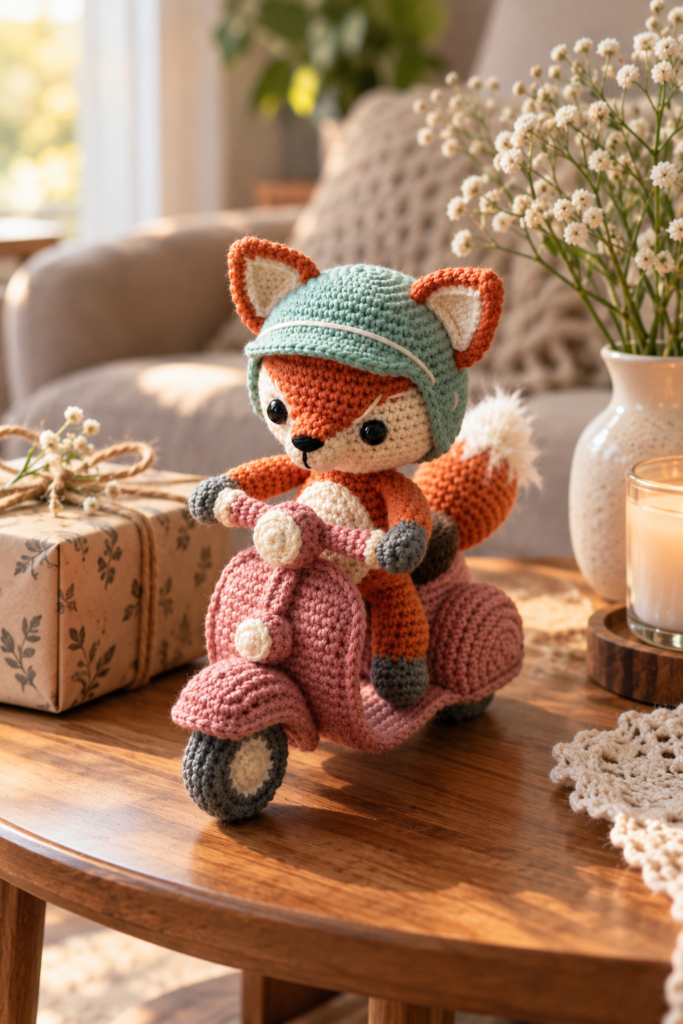
A bookshelf, craft room, wooden shelf, nursery display, or cozy side table can all work well. Keep it away from prolonged direct sunlight and moisture.
Final Thoughts
This Cute Amigurumi Fox on Scooter Free Crochet Project is a fun example of how a few extra details can turn a simple amigurami animal into a memorable handmade character.
The orange-and-cream fox already has plenty of charm, but the mint cap, pink scooter, gray details, and oversized tail give the finished piece a playful story. For crocheters, it is also a useful project for practicing shaping, stuffing, facial placement, small accessories, and careful assembly.
If you’re making a project inspired by this design, don’t worry about finishing it as quickly as possible. Take your time with the face, keep your stitch counts consistent, and test the scooter pose before permanently sewing everything together.
Most importantly, enjoy the handmade process. The tiny imperfections that come from working with yarn by hand are part of what makes amigurami special.
Save this project for your next crochet session, gather your favorite yarn colors, and give your own little fox a place to ride.